View leader digital copy A flipbook.
SILVERY LIGHT SAILING DEVELOPMENT STRATEGY 2026 - 2030
Leader in the Scottish Isles……. Sunrise Sunset
1 Introduction Silvery Light Sailing is a registered charity with responsibility to maintain and operate STV Leader, a vessel of exceptional national maritime heritage significance. Built in 1892 Leader is a working example of Britain’s maritime past providing all ages access to Heritage sailing, skills and adventure. Following a period of turbulent administration and the burden of legacy debt, the charity and Leader are in a process of reorganization The charity is immensely reliant upon and deeply appreciative of its volunteers support, This Two Part document sets out a strategy for the future whilst serving also as a call for partnership and financial assistance. Part One — Our Story and Mission The first part of this document sets out the story and mission of Silvery Light Sailing and the heritage significance of Leader. It explains why her preservation is important—not simply as a vessel, but as a nationally recorded part of our maritime heritage and a platform for education, maritime skills and adventure. Part Two — Partnership, Recovery and InvestmentIn Part Two sets out the need for partnership, the restructuring plan, its action timeline and financial targets. The Trustees believe the plan provides a realistic, achievable and sustainable pathway to recovery, built on stronger governance, appropriate conservation, strategic partnerships, diversified income and investment in people and volunteers. In addition to the ability to raise internal revenue from sailing activities, success is dependent upon financial sponsorship, philanthropic giving, strategic partnerships and the continued commitment of our volunteers and supporters. On behalf of the Trustees, I invite all who share our vision to help write Leader’s next chapter. Through partnership, investment and shared commitment, we can secure the Heritage of this remarkable vessel and ensure that she continues to sail, educate and inspire for generations to come. Gerry Brennan Chairman of Trustees Silvery Light Sailing
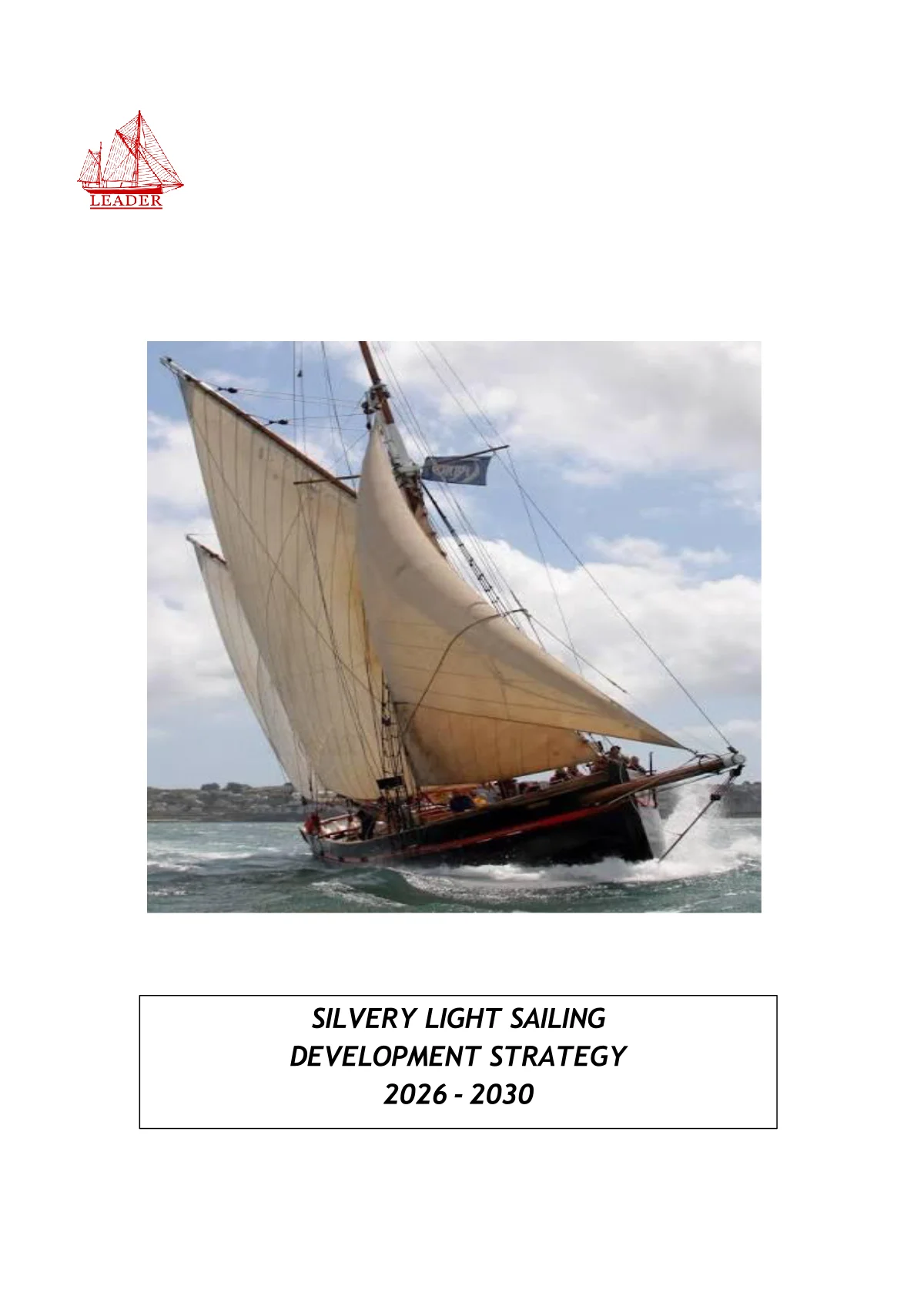
2 BRIXHAM TRAWLER - ‘LEADER’ LOA: 100’0″ / 30.50mm LOD: 80’0″ / 24.40m LWL: 68’3″ / 20.80m Beam: 19’4″ / 5.90m Draft: 9’10” / 3.00m Displacement: 110 tons / 100 tonnes Ballast: 16.5 tons / 15 tones Sail Area: 2390 sq ft / 222 sq m Launched: 1892 – Built by: W. A. Gibbs’ Yard, Galmpton, River Dart, Devon
3 Contents Introduction 1 Part One The Story of Leader 6 Mission 9 The Case for Change 10 Part Two Partnership Strategy 16 Operations – How we will do Things 19 Implementation Plan 23 Appendices A - Financial Investment 30 Contact Details NIC106336 Enterprise House WIN Business Park Registered NI 636536 Newry BT35 6PH Co Down
4
5 PART 1
6 THE STORY OF LEADER Origins and Heritage Significance LEADER was built in 1892 by Thomas Upton of Brixham at a time when sailing trawlers formed the backbone of Britain’s fishing industry. She is a unique surviving example of this once-dominant fleet — a rare, fully operational link back to the craftsmanship, seamanship and working traditions of the late Victorian maritime world. Her hull form, rig and working layout represent the pinnacle of the Brixham trawler design: fast, seaworthy, and capable of working the demanding waters of the Irish Sea, English Channel and North Atlantic. Today, LEADER stands as a living artefact of that era — not a static museum piece, but a vessel that continues to sail, teach and inspire. A Working Life at Sea For decades, LEADER earned her living under sail, fishing from ports across the south-west of England. Her working life shaped the communities she served, contributing to local economies and sustaining generations of seafarers. As steam and motor vessels replaced sail, most trawlers were lost to time. LEADER survived because of her exceptional build quality and the commitment of owners who recognised her heritage value. Her survival into the 21st century is remarkable; her continued operation is extraordinary. Transition to Heritage Vessel By the late 20th century, LEADER had become one of the last of her kind still afloat. Her transition from working trawler to heritage vessel marked a new chapter — one focused on education, community engagement and the preservation of traditional seamanship. Silvery Light Sailing became her custodian a decade ago, recognising both her historic importance and her potential as a platform for experiential learning. Volunteers, maritime professionals and supporters have contributed thousands of hours to her maintenance, operation and interpretation. LEADER as a Living Classroom LEADER’s greatest value lies in her ability to teach through experience. She offers: • traditional seamanship — ropework, sail handling, navigation • teamwork and confidence-building — shared tasks, responsibility, problem-solving • maritime heritage interpretation — understanding the way of the sea and Heritage Vessels • environmental awareness — wind-powered travel, marine ecosystems
7 • intergenerational learning — young people and adults learning side by side These experiences cannot be replicated in a classroom or museum. They require a working vessel, skilled volunteers, and safe access to the sea. Community and Volunteer Contribution Volunteers are central to LEADER’s story. They continue to: • maintain her historic fabric • crew voyages • deliver educational programmes • support fundraising • introduce her heritage to the public Their commitment has kept LEADER sailing despite limited resources and rising costs. This strategy seeks to both recognise and strengthen their contribution. A Vessel of National Importance LEADER is known across the maritime heritage sector as a vessel of national significance. She is listed as part of the Core National Fleet on the National Historic Ships Register. Her continued operation is a small but not insignificant contribution to Maritime Heritage and community accessibility through: • preservation of traditional shipwright skills • training of new generations in heritage seamanship • cultural tourism and regional identity (Northern Ireland – North Wales) • public engagement with maritime history and traditions Few vessels offer this combination of authenticity, operational capability and public benefit. Why Her Story Matters Now ‘LEADER’ is at a critical juncture. Without strategic investment, her ability to operate safely and deliver public benefit will diminish. With investment, she can continue to inspire all age groups, strengthen maritime heritage and contribute to education, wellbeing, community engagement and adventure for decades to come. LEADER’s story does not end here….
8
9 Mission The charity Silvery Light Sailing exists to operate and protect the 1892 built Heritage sailing vessel, ‘Leader’ for public benefit delivering maritime education, skills development, community engagement, wellbeing voyages and traditional sailing in a residential hands on setting The mission is to keep Leader sailing, accessible, safe, and relevant for future generations. Changing Operating Environment Heritage organization face rising regulatory and compliance demands, escalating maintenance and refit costs, reduced volunteer capacity, and increased competition for funding. Public expectations have moved toward measurable outcomes, inclusive participation and demonstrable organisational resilience. Strategic Priorities 1. Protect the Vessel Deliver essential conservation, machinery and rigging renewal, and compliance-critical works. 2. Strengthen Organisational Capacity Charity governance, clarify roles, modernise systems, provide sustainable volunteer pathways to progress. 3. Deliver Measurable Public Benefit Expand education, skills, wellbeing, heritage engagement, and community programmes. 4. Secure Long-Term Resilience Diversify income, build strategic partnerships, and implement a sustainable operating model. Expected Outcomes (2027–2030) Leader fully operational, compliant, and safely delivering sailing programmes. • A strengthened board and volunteer community with clear roles and capacity. • A modernised, financially resilient organisation with diversified income streams. • Expanded public benefit: more learners, more community engagement, increased heritage participation. • Leader positioned as a regional flagship for maritime heritage, education, and community impact.
10 CASE FOR CHANGE Overview Silvery Light Sailing’s contribution to heritage vessel preservation is considerable. Volunteers have delivered hundreds of hours of public benefit maintaining and crewing Leader. This review highlights administrative, organizational and operational policies that we will address to secure the charity’s and Leader’s future. Silvery Light Sailing will transition from a resource-limited volunteer-dependent organisation to a strategically partnered, professionally managed and financially resilient heritage charity. This is not a departure from the charity’s ethos. It is an evolution to protects the vessel, strengthen the volunteer community, and expand the public benefit Professional Staff Silvery Light Sailing the charity, and its main asset, the fully operational heritage vessel LEADER requires a blend of skilled onboard crew and structured shore-based administrative support. Safe sailing, maintenance, training and regulatory compliance cannot be delivered by volunteers alone; they depend on qualified skippers watch-leaders, and experienced deck crew supported by a shore team managing scheduling, certification, insurance, finance, communications, and partner coordination. Without this dual structure, operational pressure falls disproportionately on volunteers increasing risk and reducing the charity’s ability to deliver consistent public benefit. Risks of Inaction If the charity does not act, the risk profile will increase: • Operational risk — LEADER becomes unsafe or uninsurable • Financial risk — inability to meet rising costs • Reputational risk — failure to protect a nationally significant vessel • Volunteer risk — burnout, attrition and loss of sk • Public benefit risk — reduced access, fewer programmes, diminished impact • Heritage risk — irreversible deterioration of historic fabric
11 Financial Fragility The charity’s source of income is currently: • grant-dependent • insufficiently diversified • lacking unrestricted reserves • vulnerable to external shocks This fragility limits the charity’s ability to plan, invest and respond to emerging risks. Competition for Funding Heritage funding is increasingly competitive. Funders now rightly expect. • measurable outcomes • strategic partnerships • professional governance • long-term sustainability plans • diversified income streams Public Benefit Investment. Funders and regulators increasingly require: • inclusion and accessibility • youth engagement • wellbeing outcomes • environmental sustainability • community participation • educational impact
12 Volunteer Capacity Volunteers are the backbone of the charity, supported with structured training and development opportunities to avoid: • Limited availability • Lack of qualification training • Burnout risk due to organisational strain • Difficulty attracting younger volunteers. Silvery Light Sailing Operation and Maintenance Liabilities LEADER is approaching 135 years of age. Her timber hull, frames, deck structures, rigging and mechanical systems are by and large robust but as with all heritage vessels require planned maintenance. Upkeep costs have risen sharply due to: • scarcity of traditional shipwright skills • increased cost of timber and specialist materials • regulatory expectations for heritage vessels • inflation in marine engineering and insurance Operational and Regulatory Requirements Operating a charity supporting a large historic vessel requires: • Stringent safety management systems • Increased documentation and compliance • Professional oversight • Experienced Charity administration and management. • Structured volunteer training and certification
13 Opportunities Created by Strategic Renewal Programme With investment and partnership, Silvery Light Sailing can: • Secure LEADER’s future for 20+ years • Expand educational and community programmes • Strengthen volunteer recruitment and retention • Develop new income streams • Build Heritage partnerships • Increase tourism and cultural engagement • A recognised leader in traditional sailing heritage Conclusion To meet the regulatory and financial challenges of today the charity must adopt a new strategic direction that recognises and rewards volunteers, protects LEADER, strengthens organisational capacity, and expands public benefit.
14 LEADER ACCOMMODATION 12 X Guests – Trainees 5 x Crew
15 PART 2
16 PARTNERSHIP STRATEGY Purpose of the Partnership Strategy Silvery Light Sailing cannot — and should not — attempt to deliver LEADER’s future alone. A vessel of national heritage significance requires a network of strategic partners to contribute skills, resources, facilities, and public engagement. This partnership strategy aims to: • reduce operational and financial risk • expand educational and community programmes • strengthen volunteer recruitment and retention • improve access to specialist maritime skills • enhance visibility and public benefit • support long-term sustainability Partnerships are not optional; they are essential. Partnership Principles A Partnership shows trust and commitment and to be successful must be built on the following principles: • Mutual Benefit — both parties gain value. • Shared Purpose — alignment with heritage, education, and public benefit. • Clarity — defined roles, responsibilities, and expectations. • Sustainability — long-term collaboration, not short-term fixes. • Respect for Heritage — conservation decisions remain aligned with LEADER’s historic integrity. • Volunteer Support — partnerships must strengthen, not replace, the volunteer community.
17 Partnership Development Roadmap (2027–2030) 2027 — Foundation Building • Identify priority partners • Initiate discussions with heritage and educational bodies • Develop partnership framework and MOUs • Establish joint funding opportunities 2028 — Formalisation • Secure at least one strategic heritage partner • Launch joint educational programmes • Formalise volunteer training partnerships • Integrate partners into maintenance planning 2029 — Expansion • Develop cross-border heritage collaborations • Expand youth and community partnerships • Increase tourism and cultural engagement • Co-deliver public programmes and events 2030 — Consolidation • Review partnership effectiveness • Renew long-term agreements • Integrate partners into strategic planning • Strengthen shared funding pipelines Benefits of Strategic Partnership • increased organisational capacity • reduced operational pressure on volunteers • access to specialist skills and facilities • expanded educational and community programmes
18 • improved funding competitiveness • stronger governance and compliance • enhanced visibility and public engagement • long-term sustainability Summary A strong partnership network is essential to Silvery Light Sailing. It will increase capacity, reduces risk, expand public benefit, and strengthen the charity’s ability to deliver a sustainable, high-impact heritage programme. Our aim is to position Silvery Light Sailing as a reliable forward -looking heritage organisation ready and willing to work with others to secure LEADER’s long-term future.
19 OPERATIONS - HOW WE WILL DO THINGS Silvery Light Sailing will operate LEADER safely, sustainably, and effectively ensuring • predictable annual activity and income • balanced maintenance and sailing periods • safe and compliant operations • structured volunteer involvement • diversified income generation • strong governance and oversight • resilience against financial and operational shocks Period Activity Jan–Mar Winter maintenance, training, planning Apr–Jun Education programmes, community voyages Jul–Aug Festivals, tourism, heritage sailing Sep–Oct Youth programmes, cross-border collaboration Nov–Dec Review, fundraising, volunteer recruitment Vessel Operations LEADER will operate on a planned annual cycle that balances: • voyage delivery (education, community, heritage sailing) • public engagement (events, festivals, tourism) • maintenance periods (scheduled, predictable, properly resourced) • training and certification (crew and volunteers) Operations will be overseen by: • a designated Operations Lead/Project Manager • qualified skippers and watch-leaders
20 • trained volunteer crew • shore-based administrative support • RYA - MCA Commercial Vessel regulations Maintenance & Conservation Maintenance will follow a structured plan: • annual winter maintenance period • quarterly inspections • planned conservation tasks • partnership support from heritage shipwrights • digital maintenance logs and compliance records • reduces risk, prevents deferred maintenance, and ensures funders see a credible long-term stewardship plan. Volunteer Programme . The volunteer programme will include: • structured recruitment • clear roles and progression pathways • accredited training (RYA, heritage seamanship, safety) • mentoring and skills development • recognition and retention initiatives • digital volunteer management tools • ensures volunteers feel valued and supported. Education & Community Delivery LEADER will deliver: • youth sail training • maritime heritage education • wellbeing voyages • community participation programmes
21 • intergenerational learning • International Heritage collaboration Programmes will be co-designed with partners to ensure relevance, accessibility, and measurable impact. Public Engagement & Tourism LEADER will participate in: • maritime festivals • heritage events • open days • harbour activities • cultural & tourism initiatives Governance & Compliance Governance will be strengthened through: • modernised board structures • clear trustee roles • risk management frameworks • safety management systems • digital compliance tools • annual strategic reviews • ensuring funders see a competent, professional organisation capable of managing a major heritage asset. Diversified Income Streams Income will be balanced across: • Voyage and Charter Revenue • Philanthropic giving • Corporate sponsorship & Community Fundraising • Heritage Grants • tourism and events
22 Building Reserves To accommodate future planned expenditures and mitigate against unexpected crisis, the charity will establish: • a restricted maintenance reserve • an unrestricted operating reserve • a capital replacement reserve. Cost Management Costs will be controlled through: • planned maintenance • partnership support • volunteer training • digital systems reducing admin burden • predictable annual budgeting This reduces volatility and improves financial resilience. Outcomes of the Operating Model By 2030, the operating model will deliver: • predictable, safe, year-round activity • stronger volunteer capacity • expanded education and community programmes • increased unrestricted income • reduced operational risk • improved governance and compliance • a sustainable future for LEADER
23 The Implementation Plan translates the strategy into a practical phased and directed work programme giving: • clear sequencing of activity • realistic workload distribution • alignment with volunteer capacity • integration with partnership development • predictable budgeting and fundraising • measurable progress and accountability Phases Phase Period Focus Phase A 2026/27 Foundations surveys, governance, digital systems Phase B 2028 Major capital works, partnership formalisation Phase C 2029 Rigging, systems, education expansion, tourism Phase D 2030 Consolidation, evaluation, long-term agreements This phased approach ensures capacity is not overstretched and investment is properly sequenced Phase A - Foundations (2026/27) Key Actions • Commission full condition survey • Develop conservation plan and costed refit schedule • Strengthen governance and trustee roles • Recruit part time shore based administrator, fund raiser. • Recruit Operations Lead (volunteer or part-time professional) • Implement digital systems (CRM, compliance, volunteer management) IMPLEMENTATION PLAN -
24 • Initiate discussions with heritage, education, and maritime partners • Launch volunteer recruitment and training cycle • Begin fundraising and grant applications • Establish maintenance reserve and financial controls Milestones • Survey completed • Conservation plan approved • Governance framework updated • Digital systems operational • First partnership MOUs drafted • Effective Administrative and financial policies and controls • Fund raising and marketing returning dvidend Risks • Survey reveals additional works • Volunteer capacity limits early progress • Funding delays Mitigation • Build contingency into costings • Prioritise volunteer support • Diversify funding applications Phase B - Major Capital Works (2028) Objective: Deliver the first major tranche of structural and systems investment. Key Actions • Begin hull and structural conservation • Engage specialist shipwrights and heritage yards • Form strategic heritage partnerships • Strengthen volunteer maintenance teams • Deliver machinery and systems renewal
25 • Expand educational partnerships • Increase fundraising and sponsorship activity Milestones • Hull works underway • Machinery and systems plan finalised • Strategic heritage partner secured • Volunteer training programme expanded Risks • Yard availability • Cost inflation • Weather delays Mitigation • Early booking of yard slots • Multi-quote procurement • Flexible scheduling Phase C - Rigging & Public Engagement (2029) Objective: Complete rigging works and expand LEADER’s public benefit programmes. Key Actions • Renew standing and running rigging • Replace or refurbish sails • Deliver navigation and safety upgrades • Launch expanded youth and community programmes • Increase festival and tourism participation • Strengthen cross-border heritage collaboration • Grow unrestricted income through public engagement Milestones • Rigging completed
26 • Education programmes expanded • Tourism and festival calendar established • Cross-border partnership active Risks • Rigging delays • Volunteer fatigue • Programme over-extension Mitigation • Staged rigging schedule • Volunteer support and recognition • Controlled programme growth Phase D - Consolidation & Sustainability (2030) Objective: Embed sustainability, evaluate and secure LEADER’s future beyond 2030. Key Actions • Evaluate investment outcomes • Review governance and operational model • Renew long-term partnership agreements • Strengthen reserves and financial resilience • Publish impact report for funders and stakeholders • Plan next 10-year maintenance cycle • Expand volunteer leadership roles • Develop long-term education and tourism strategy Milestones • Impact report published • Long-term partnership agreements signed • Reserves strengthened • 2030–2040 maintenance plan approved
27 Risks • Post-investment complacency • Funding plateau • Partnership drift Mitigation • Annual strategic reviews • Continued diversification of income • Active partnership management Trustees • Strategic oversight • Governance and compliance • Financial stewardship • Partnership approval • Risk management • Vessel operations • Safety management Monitoring & Reporting Progress will be monitored through: • quarterly trustee reports • annual strategic review • maintenance logs • volunteer feedback • partner review meetings • financial performance reports • public benefit metrics
28 Implementation Summary By following a phased, structured plan, Silvery Light Sailing will: • deliver major capital investment • strengthen organisational capacity • expand public benefit • secure LEADER’s future for 20+ years • position the organisation as a leading maritime heritage organisation
29 Conclusion Silvery Light Sailing enters a new period of development with clarity, unity and purpose. Leader is a heritage asset of national significance, and this plan is an investment in her preservation, her public benefit mission, and her future as a platform for youth development, community engagement, and partnership collaboration. Securing financial and longer term support Leader will continue to serve safely, proudly, and with lasting impact This Strategic Renewal & Investment Plan sets out a clear, costed, and deliverable pathway for Silvery Light Sailing and Leader over the period 2027–2030. It is a three- year strategy, but its impact will continue to endure far beyond 2030. While this plan outlines a multi-year programme the most urgent priority is securing sufficient funding to refit Leader to enable her return to operational sailing
30 APPENDIX A to Strategic Renewal & Investment Plan - dated Aug 2026 Strategic Renewal & Investment Plan 2027–2030 Overview of Financial Assumptions This appendix provides the detailed financial modelling, cost breakdowns, and assumptions underpinning the Strategic Renewal & Investment Plan. • Grant applications • Benefactor negotiations • Trustee decision-making • Regulatory scrutiny • Long-term planning The totals are indicative but based on realistic maritime, heritage, and programme delivery costs. Income Projections (2027–2030) Income Source 2027 2028 2029 2030 Grants Corporate Sponsorship Individual Donors £10,000 £10,000 £12,000 £15,000 Annual giving campaigns Earned Income (Voyages) Festival & Community Fees £120,000 £120,000 £140,000 £140,000 youth + Adult voyages £10,000 £10,000 £15,000 £15,000 Festivals & Heritage events Total Income £210,000 £270,000 £257,000 £260,000 £40,000 £100,000 £50,000 £50,000 Grant Making bodies £30,000 £30,000 £40,000 £40,000 Corporate Donors
31 Expenditure Projections (2027–2030) Operating Expenditure Category 2027 2028 2029 2030 Notes Vessel Maintenance & Certification Crew & Volunteer Training £60,000 £40, 000 £40,000 £40,000 Includes refit follow-on works £10,000 £10,000 £10,000 £10,000 Competency, safety, safeguarding Programme Delivery £100,000 £120.000 £130.000 £135.000 Crew salaries, provisioning etc Insurance & Compliance Administration & Governance £15,000 £20,000 £25,000 £25,000 Maritime + charity compliance £25,000 £40,000 £45,000 £50,000 p/t Staff Total Expenditure £210,000 £230,000 £250,000 £270,000 Capital Investment (2027–2030) Leader — Refit and Conservation Works Work Package Cost Year Notes Safety-critical, required Immediately Electrical, plumbing, navigation Stabilisation & Certification £60,000 2027 Systems Modernisation £70,000 2028 Hull & Rigging £80,000 2029
32 Cashflow Forecast Year Opening Balance Income Expenditure Surplus Closing Balance 2027 £0 £210,000 £210,000 £0 £0 2028 £0 £270,000 £230,000 £40,000 £40,000 2029 £40,000 £257,000 £250,000 £7,000 £47,000 2030 £47,000 £260000 £270.000 -£10.000 £37,000 Risk & Sensitivity Analysis Key Financial Risks • Cost inflation in maritime works • Grant dependency • Vessel downtime • Insurance increases • Volunteer availability Sensitivity Modelling • A 10% increase in Programme delivery cost requires an additional £16,000 • A 20% increase in insurance premiums adds £750.00 . A reduction of thrree residential voyages equals loss of £19,000 income
33 Financial Governance Controls • Quarterly management accounts • Annual independent examination • Restricted fund tracking • Multi-year budgeting • Finance & Audit Committee oversight • Vessel maintenance reserve ring-fencing
34 REFIT AND MAINTENANCE
Brixham sailing trawler built in 1892 and worked until the early 1970's until being converted for charter and sail training. Currently coded under MCA Cat 2 for 12 guests plus crew, she is a well known and much loved traditional charter vessel. A very comfortable and well equipped vessel. 35 • Year: 1892 • Length on deck: 80' • Beam: 19' • Draft: 10'6"
][] 36