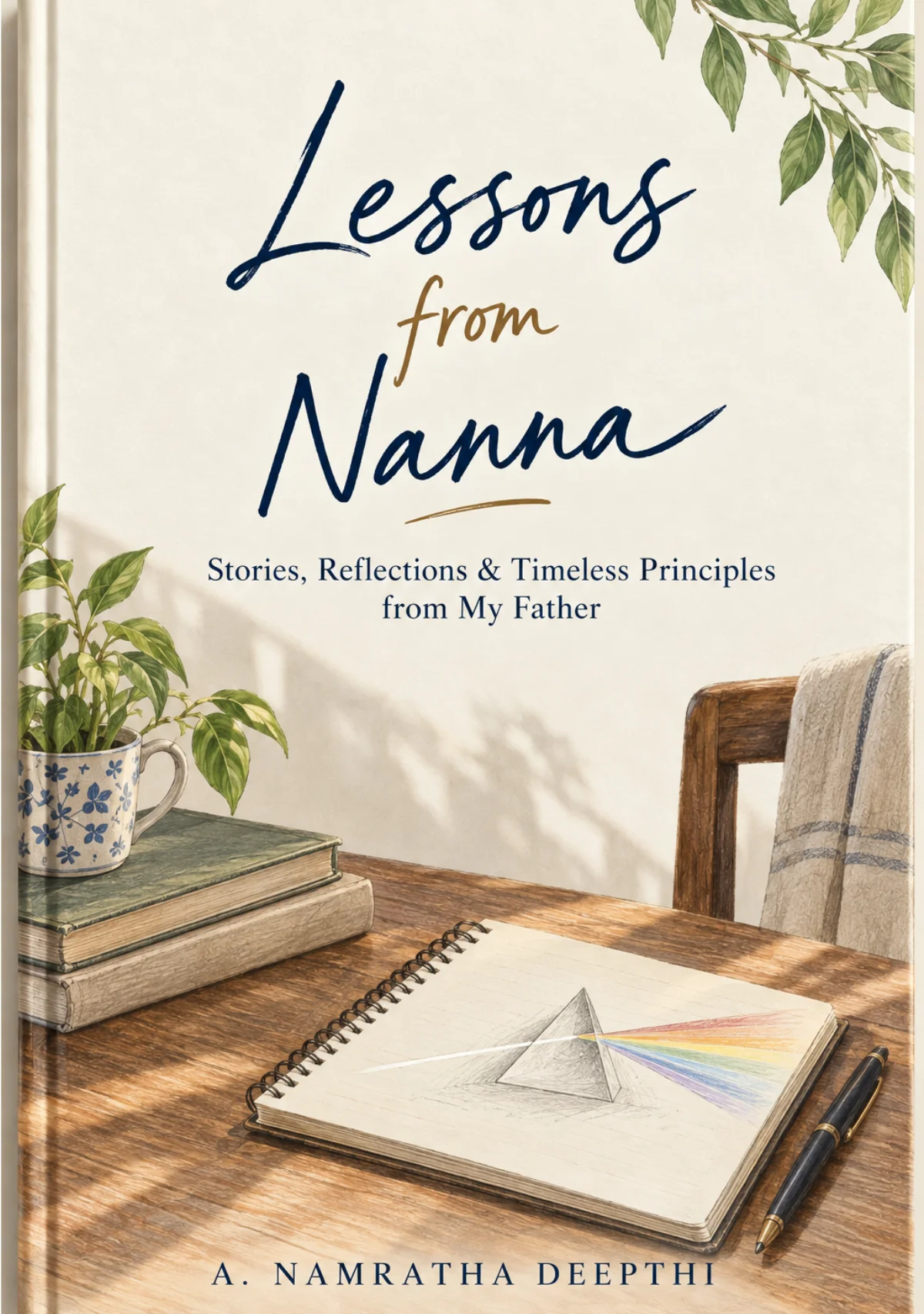
A personal collection of life lessons the author learned from his father, Nanna, told through stories from childhood, college, and everyday moments. The book covers principles like playing to your strengths, presence of mind, choosing the right shortcuts, and the habit of saving. Each chapter presents a real incident followed by the insight it carries, aimed at students, working professionals,…
This is a personal book of life lessons written by an author reflecting on what he learned from his father, whom he calls Nanna. It is intended for students, working professionals, and anyone seeking practical wisdom for daily life. The stories come from real moments in the classroom, at home, and during casual conversations.
The preface explains that the author did not set out to write a book but wanted to begin somewhere by writing down what stood out most clearly from his father's teachings. The introduction frames the book as a collection of small, ordinary moments that carry powerful lessons about how to respond to life with clarity and composure.
Chapter 1, Playing to Your Strengths, opens with the story of Nanna's first interview for a lecturer post. Despite studying in Telugu-medium schools, he impressed the panel by explaining a prism and refraction through an analogy about knowledge entering a classroom. The chapter introduces Nanna's version of KYC, Know Your Class, Classmates, College, Career Direction, Consciousness, and Coordinates.
Chapter 2, Presence of Mind, recounts a high school stage play where Nanna's dhoti began to slip during a performance. Instead of panicking, he incorporated the moment into his dialogue about the freedom struggle, turning embarrassment into audience applause. The chapter illustrates how composure under pressure can transform a crisis into a memorable moment.
The table of contents lists nine chapters plus a concluding section titled What We Practise. The remaining chapters cover Choosing the Right Shortcuts, Did You Enjoy Your Day, Seeing the Bigger Picture, Serving with Intent, Being Firm When Needed, The Habit of Saving, and Timely Appreciation. Each chapter follows the pattern of a story followed by the lesson it contains.